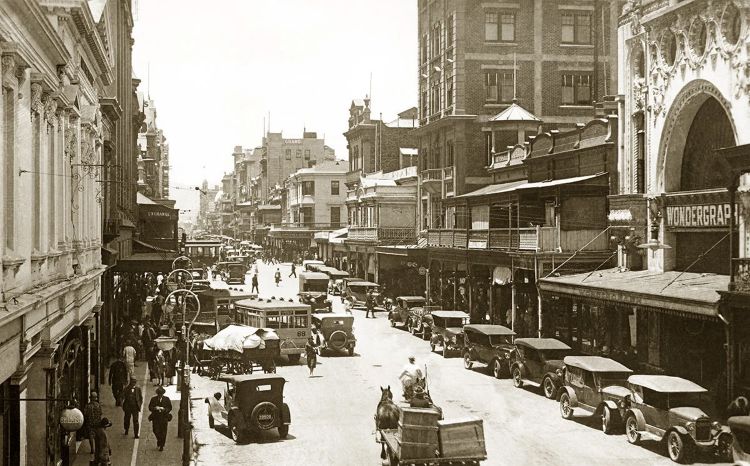
From Vision to a Growing City
Since its inception, Adelaide History has been renowned for its culture, well-planned urban layout, and visionary planning. Established in 1836, the city developed differently from other Australian cities; its well-planned urban design, wide streets, and the parklands surrounding the city center give it a distinctive character. With its blend of historical landmarks, cultural institutions, and modern infrastructure, the city clearly reflects the evolution it has undergone over more than a century.
A City Designed Before It Grew
Adelaide was established as the capital of South Australia in 1836. Unlike other Australian cities, Adelaide was developed with a unique structure based on the concept of a free settlement. Colonel William Light was responsible for the city’s design, creating a central urban area surrounded by parklands. The initial plan incorporated wide streets, public squares, and green spaces—features that would later become hallmarks of the city. The design also anticipated future expansion to accommodate population growth.
From Early Settlement to Growing Capital
As agriculture and trade expanded across South Australia during the 19th century, the city of Adelaide grew and developed rapidly. Keeping pace with this growth, numerous government buildings, churches, markets, and commercial structures were built; many of these structures still stand today as significant landmarks.
Gold, Copper and the Forces of Change
Activities such as copper mining, agriculture, and animal husbandry played a significant role in Australia’s economy during Adelaide’s development. Against this backdrop, Adelaide gradually established itself as a commercial hub.
As a commercial center, the city became a conduit for the movement of goods and resources from the surrounding regions. Subsequently, the development of rail, road, and port connections further strengthened its status as a trading hub, helping Adelaide transform from a fledgling colonial settlement into a fully-fledged city.
Streets That Still Tell Stories
The city is best experienced on foot—one of Adelaide’s key attractions. Its historic streets, open plazas, and preserved old buildings evoke the atmosphere of a bygone era for newcomers.
“North Terrace” and its surrounding areas have long been deeply intertwined with education, culture, and civic life. Historic institutions, museums, galleries, and government buildings have established Adelaide as a hub of education, culture, and the arts.
War Years and a Changing Society
Like other cities, Adelaide was significantly impacted by military preparations during both World Wars, a period that brought about profound social and economic changes. Following the Second World War, people from diverse corners of the globe arrived to settle in the city. Bringing with them varied languages, cultures, and culinary traditions, they drove a major transformation in Adelaide, ultimately shaping the city’s modern, multicultural identity.
Where Heritage Meets a Modern Outlook
Adelaide underwent significant transformation from the late 20th century through the early 21st century. The development of new residential and commercial areas, along with improvements to the transport system, reshaped the metropolitan landscape.
Despite these changes, the city has retained many of its original characteristics, such as the grid-based layout of the city center and the surrounding parklands. Additionally, a touch of modernity has been integrated into its historic structures. This blend allows visitors to witness the city’s evolution, its ups and downs, and its history—all within a compact area.
Why Adelaide’s Past Still Matters
Adelaide history is not confined merely to dates or old buildings; the city as it stands today has been shaped by a combination of sound planning, cultural growth, and economic evolution. Throughout this process of cultural and economic transformation, Adelaide has preserved its unique heritage and character since its inception. Understanding Adelaide’s history is crucial, as it reveals how bold decisions and proper urban development following its founding gradually transformed the city into a cultural and economic hub.